Fundamentals
Unpacking Horological Complications: From Tourbillons and Perpetual Calendars to Equation of Time
An advanced technical review of elite grand complications, examining how tourbillons counteract gravity, mechanical memory systems in perpetual calendars, and astronomical gear trains.

In the high-end universe of horology, a complication is defined as any function displayed on a timepiece beyond the basic tracking of hours, minutes, and seconds. While simple calendars and chronographs are widely appreciated, grand complications represent the absolute pinnacle of mechanical engineering, mathematics, and miniaturization. Understanding these mechanisms reveals the profound depth of traditional watchmaking craftsmanship.
1. The Tourbillon: Conquering Vertical Gravity Error
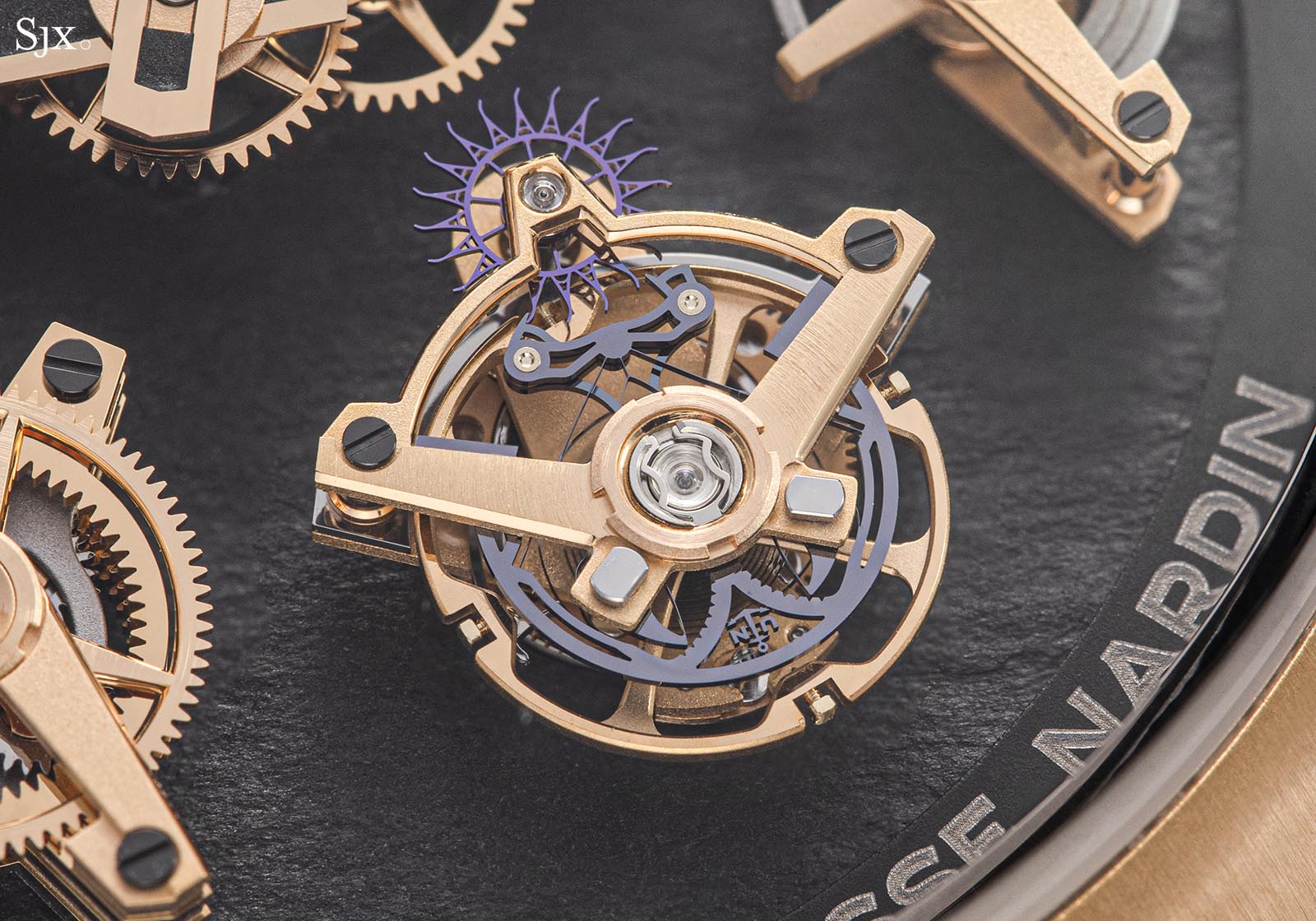
Invented by Abraham-Louis Breguet in 1801, the tourbillon was engineered to combat positional rate errors caused by Earth's gravity acting on the balance wheel assembly when a pocket watch remained static in a vertical vest pocket.
- The Rotating Carriage: By housing the entire escapement—balance wheel, hairspring, lever, and escape wheel—inside a continuously rotating cage (typically completing one full rotation every 60 seconds), gravity's downward pull is averaged out across all vertical planes.
- Modern Re-Evaluation: While quartz timekeeping and modern shock-resistant wristwatches render the tourbillon functionally redundant for daily accuracy, executing a micro-engineered titanium or aluminum carriage weighing less than half a gram remains a magnificent showcase of absolute manufacturing mastery.
2. Perpetual Calendars: The Mechanical Memory Computer
Unlike standard date mechanisms that must be manually corrected five times a year during months with fewer than 31 days, a perpetual calendar is an autonomous mechanical computer.
- The 1,461-Day Cam: Using a complex program wheel that tracks a four-year cycle, the mechanism recognizes the leap year and automatically advances the date from February 28 to March 1.
- Leap Year Interlock: The heart of the system relies on a meticulously cut program cam with notches of varying depths, interacting with feeler levers that calculate the exact number of days in each specific month without user intervention until the year 2100.
3. The Equation of Time: Solar vs. Mean Time
One of the rarest astronomical complications, the equation of time tracks the discrepancy between civil mean time (our standard 24-hour day) and true solar time, which fluctuates throughout the year by up to plus or minus 16 minutes due to Earth's elliptical orbit and axial tilt. Combining these complex gear trains requires exquisite precision, making grand complications enduring collector testaments to human patience and technical genius.
Translating Specifications Into Wrist Reality
Specification sheets are written to impress, but the collector's task is to translate them into lived experience. A frequency figure becomes the smoothness of the seconds hand sweep; a water-resistance rating becomes a practical boundary for real activity rather than a literal depth guarantee; a jewel count becomes an indicator of how many friction points the movement manages. Learning to convert abstract numbers into tangible consequences is the difference between reciting marketing copy and genuinely understanding a watch. This fluency also inoculates you against inflated claims, because you can immediately reason about whether a given figure actually improves daily use.
Building a Progressive Knowledge Foundation
Horological literacy compounds. Master the core vocabulary first — escapement, amplitude, beat error, complication — then layer more advanced concepts on that stable base. Each new term should attach to a physical mechanism you can visualise, not merely a definition memorised in isolation. Collectors who build knowledge this way develop an intuition that lets them evaluate an unfamiliar watch quickly and confidently, because they understand the underlying principles rather than a catalogue of disconnected facts. Treat every new watch you encounter as a case study that reinforces and extends this foundation.
Practical Field Checklist
Before acting on any single specification, seasoned collectors run a disciplined verification pass. First, corroborate the claim against at least two independent primary sources — a manufacturer technical sheet and a respected archival reference — rather than relying on a single retail description. Second, translate the abstract specification into a real-world consequence: ask precisely how a given rating, tolerance or material property changes the way the watch behaves on the wrist across a decade of daily wear. Third, weigh the cost of being wrong. A misjudgement on a purely cosmetic detail is recoverable; a misjudgement on structural integrity, water resistance or movement authenticity can be expensive and, in the case of vintage pieces, irreversible. Building this three-step habit converts passive reading into active expertise, and it is a discipline that pays compounding dividends across an entire collecting lifetime.
Common Misconceptions Worth Correcting
Enthusiast forums perpetuate a surprising number of half-truths, and part of becoming a discerning owner is learning to question inherited wisdom. Marketing language routinely inflates the significance of features that have negligible impact on daily performance, while quietly omitting the genuine engineering trade-offs behind them. A higher number is not automatically better; a heritage name does not guarantee superior execution; and a premium price frequently reflects scarcity, brand positioning or hand-finishing hours rather than measurable functional advantage. The most valuable skill a collector can develop is the ability to separate the objectively measurable from the subjectively marketed — to appreciate craftsmanship for what it genuinely is, without mistaking narrative for physics. When a claim seems too clean or too flattering, it usually conceals a nuance that the disciplined collector takes the time to uncover.
Why This Knowledge Compounds Over Time
Isolated facts are fragile, but a connected mental model is durable. Each principle explored here interlocks with the others: material science informs servicing intervals, movement architecture shapes total cost of ownership, and historical context explains why certain designs command enduring premiums. The collectors who develop true expertise are not those who memorise the most specifications, but those who understand how the pieces relate — how a decision made at the metallurgy stage echoes through decades of maintenance, resale and daily enjoyment. Treat every article, every watch examined and every conversation with a knowledgeable dealer as another node in an expanding web of understanding, and your judgement will sharpen far faster than rote memorisation could ever achieve.
Putting Theory Into Practice
Knowledge only becomes expertise when it is exercised. The next time you handle a watch — whether at an authorized dealer, a collector meet-up or a private viewing — deliberately apply the concepts covered above rather than absorbing the sales narrative passively. Ask the specific technical questions, request to see the movement, examine the finishing under good light, and notice which claims the seller can substantiate and which dissolve under scrutiny. This active, hands-on practice transforms abstract reading into instinctive competence, and it is precisely the process by which casual admirers gradually become the trusted, discerning collectors whose opinions genuinely carry weight within the horological community.
Continue exploring the archive

Fundamentals
Decoding Horological Jargon: Chronometers, Co-Axials, and Grand Complications Explained
An educational breakdown of essential industry terminology, demystifying official COSC certifications, high-beat frequencies, and master-level complication categories for new collectors.

Fundamentals
Unraveling the Physics of Shock-Absorbing Systems: Incabloc, Kif, and Paraflex
An engineering analysis of watch movement shock protection, comparing spring geometries, pivot displacement dynamics, and impact absorption efficiency.
Fundamentals
Deconstructing Escapement Evolution: From Anchor Pallets to Silicon Constant-Force Systems
An advanced technical review of horological escapements, analyzing how anchor pallets, coaxial geometries, and silicon constant-force modules eliminate friction and optimize isochronism.